Table of Contents
- 1. Introduction
- 2. What AI in Logistics Means for Day-to-Day Operations
- 3. Why Logistics Teams Are Turning to AI
- 4. How AI is Used in Logistics Operations
- 5. Business Benefits of AI in Logistics
- 6. The Technology Behind AI-Driven Logistics
- 7. Challenges of Using AI in Logistics
- 8. Conclusion
- 9. FAQs About AI in Logistics
Even a small delay in delivery can throw your entire logistics operation off balance. Coordinating shipments, warehouses, and transport while keeping everything on schedule is challenging and exhausting. Managing so many moving parts often means relying on outdated methods, making errors and inefficiencies almost inevitable.
AI in logistics helps improve visibility, predictability, and coordination across operations by supporting better planning, route optimization, and error reduction.
This blog explores how AI supports supply chain operations and the benefits organizations gain from using it.
What AI in Logistics Means for Day-to-Day Operations
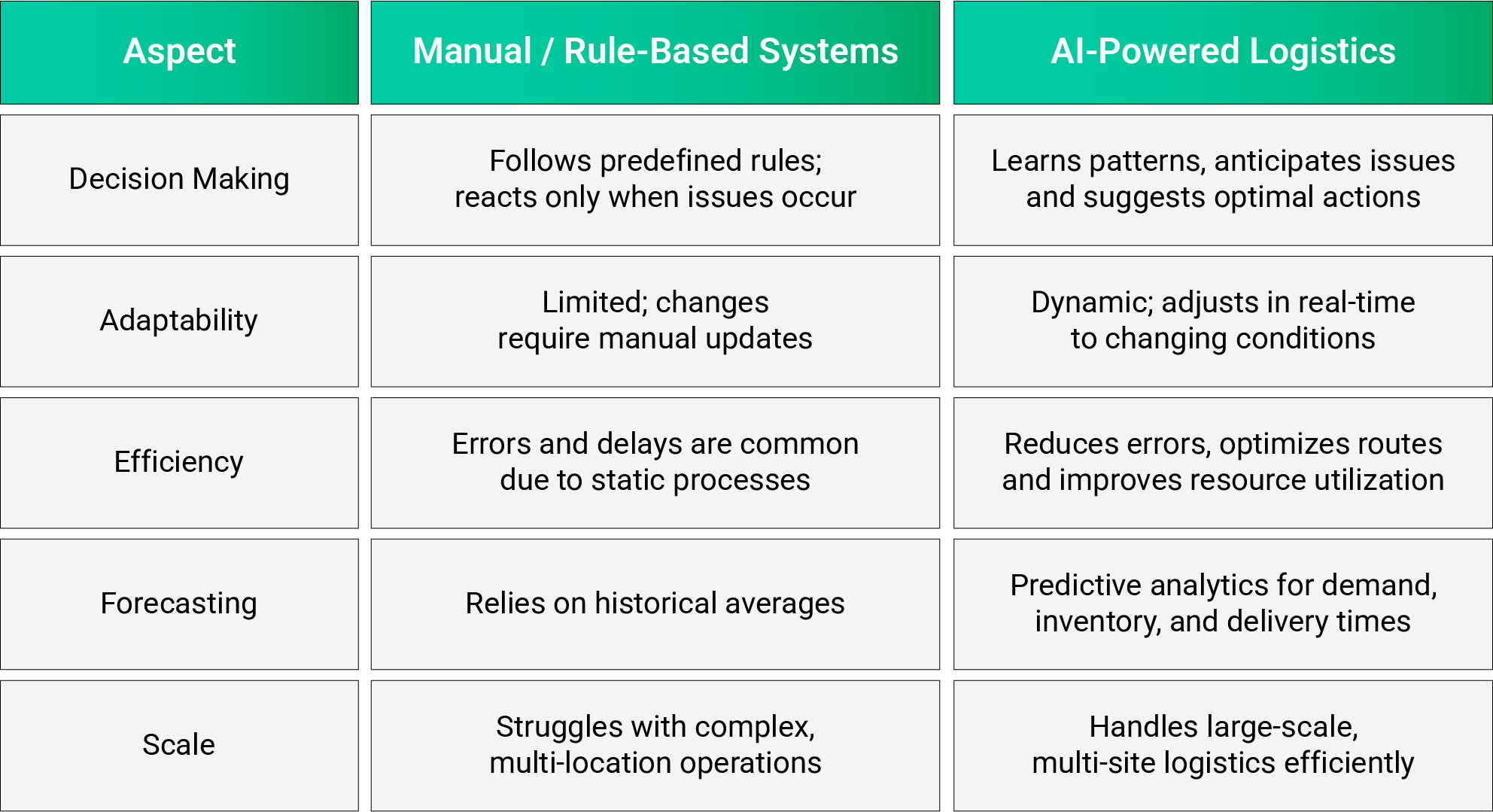
AI uses real-time data and predictive models to manage shipments, inventory, and transport across multiple locations. It forecasts demand, adjusts routes based on traffic or weather, and identifies bottlenecks before they cause delays. By learning from patterns and adapting dynamically, AI ensures resources are used efficiently and operations run smoothly.
Why Logistics Teams Are Turning to AI
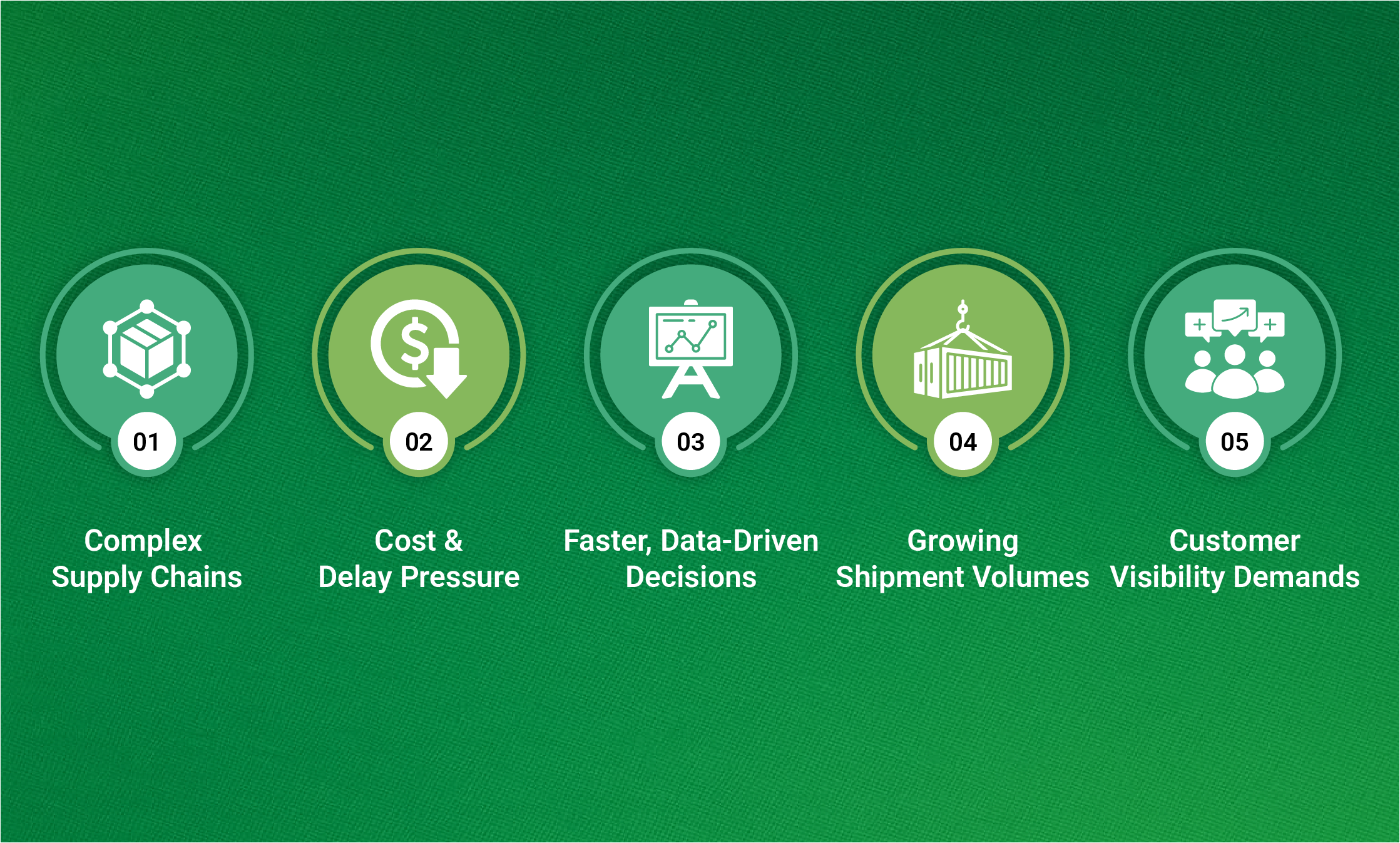
Complex Supply Chains: Multiple warehouses, suppliers, and carriers make coordination hard.
Cost & Delay Pressure: Tighter margins and faster deliveries leave no room for errors.
Faster, Data-Driven Decisions: Real-time operational data demands quick responses.
Growing Shipment Volumes: Higher e-commerce and trade orders strain manual planning.
Customer Visibility Demands: Real-time tracking and transparency are now expected.
How AI is Used in Logistics Operations
AI in Supply Chain Management
Managing supply chains across multiple suppliers, warehouses, and distribution centers is complex. Artificial Intelligence in logistics helps analyze inventory levels, supplier performance, and shipment times to improve planning, increase visibility, and coordinate operations efficiently.
Warehouse Automation Using AI
Manual warehouse processes are slow and prone to errors. AI automates picking, sorting, inventory checks, and replenishment. This increases accuracy, reduces delays, and frees staff to focus on higher-value activities like quality control and shipment planning.
AI in Transportation Management
Route planning, fleet utilization, and delivery scheduling are complex, especially under changing traffic, weather, or demand. AI optimizes routes, predicts travel times, and monitors vehicle performance, helping shipments reach their destinations on time while lowering fuel and labor costs.
Real-Time Logistics Tracking
Shipment disruptions can occur without warning. AI monitors each step of the delivery journey in real time, providing alerts for issues like traffic, delays, or weather events. This enables proactive interventions, keeps customers informed, and minimizes downtime or misrouted shipments.
One practical example of this capability is tools like Logistics Tracker Copilot. It is an AI-powered assistant that provides shipment status, inventory visibility, and exception details through natural language queries. Instead of switching between multiple systems, teams get clear, real-time answers in seconds.
Logistics Tracker Copilot supports:
- Real-time shipment status and ETA visibility
- Intelligent rerouting suggestions based on live traffic and disruptions
- Inventory availability across warehouses with proactive alerts
- Exception detection with delay reasons and recommended actions
By combining real-time logistics data with conversational interfaces, the copilot reduces manual tracking and supports faster operational responses.
Logistics Process Automation
Many logistics tasks, such as order processing, approvals, and reporting, are repetitive and error-prone. AI automates these processes, reducing manual effort, improving accuracy, and speeding up operations across the supply chain. Businesses can handle higher volumes without increasing staff workload.
Business Benefits of AI in Logistics
- Improved Operational Speed: Automated decision support and workflow execution reduce delays across planning, warehousing, and transportation activities.
- Higher Planning Accuracy: More precise demand and inventory forecasts reduce guesswork and improve alignment between supply, storage, and delivery.
- Reduced Cost Leakage: Better routing, capacity planning, and automation lower fuel consumption, labor overhead, and rework caused by errors.
- Consistent Delivery Performance: Predictive scheduling and proactive issue detection improve on-time delivery rates and service reliability.
- Operational Scalability: Higher shipment volumes and multi-location operations can be handled without linear increases in staffing or manual effort.
- Stronger Decision Confidence: Access to timely, data-backed insights supports more consistent operational and strategic decisions.
- Improved Customer Experience: Accurate delivery timelines and proactive communication increase trust and reduce service escalations.
The Technology Behind AI-Driven Logistics
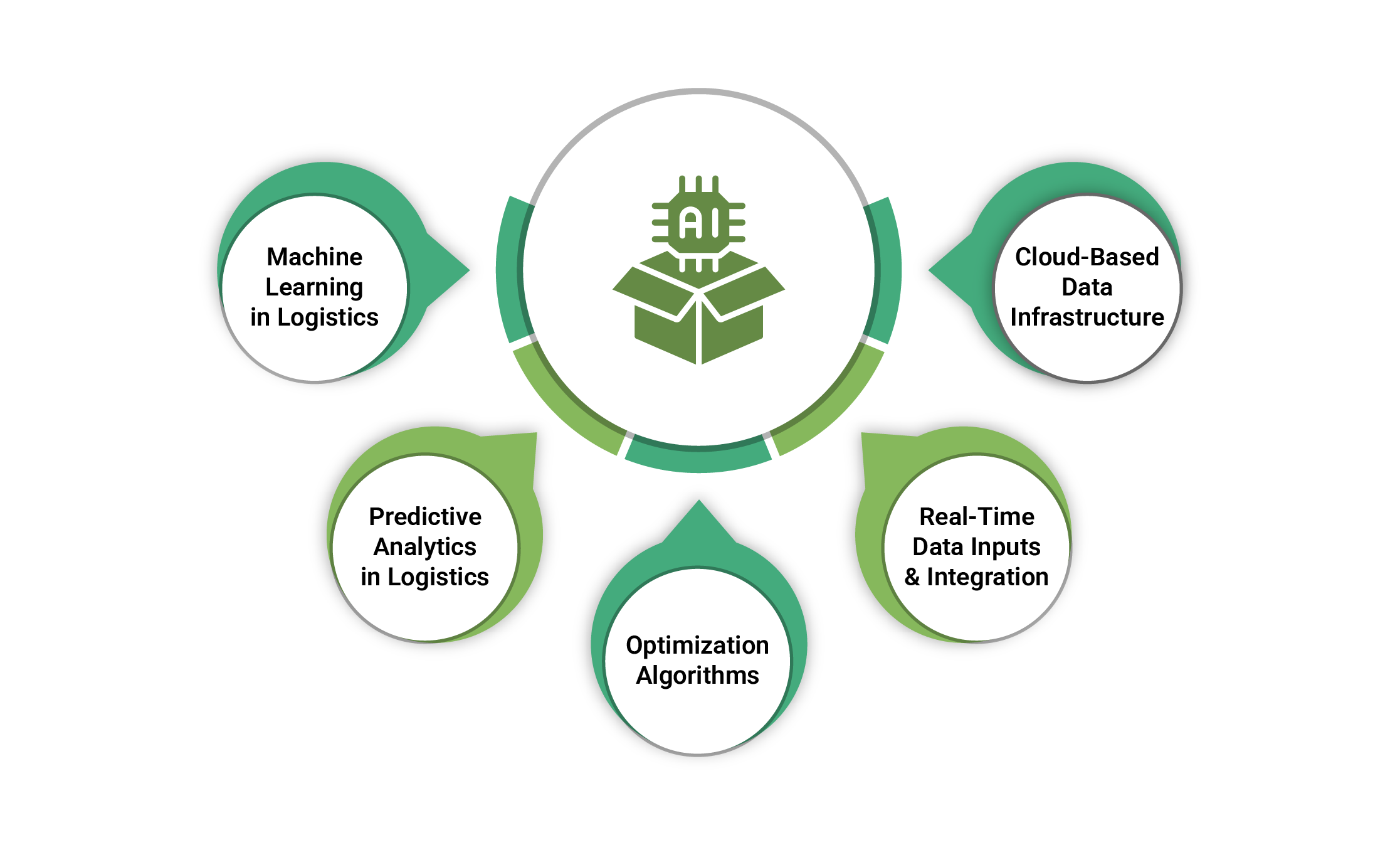
Machine Learning in Logistics
Machine learning models learn from historical and live logistics data to improve outcomes over time. They refine demand forecasts, routing decisions, inventory planning, and exception handling as conditions change. The system improves continuously without requiring constant rule updates.
Predictive Analytics in Logistics
Predictive analytics focuses on what is likely to happen next. It anticipates demand shifts, delivery delays, capacity shortages, and inventory risks before they impact operations. This allows teams to plan ahead instead of reacting after issues occur.
Optimization Algorithms
Logistics decisions often involve trade-offs between cost, time, capacity, and service levels. Optimization algorithms evaluate thousands of possible scenarios to identify the most efficient option. They are essential for route planning, load optimization, scheduling, and capacity allocation.
Real-Time Data Inputs and Integration
AI systems rely on continuous data from warehouses, vehicles, tracking systems, ERP platforms, and sensors. Real-time inputs keep models accurate and decisions aligned with current conditions. Without reliable data integration, AI outputs lose relevance quickly.
Cloud-Based Data Infrastructure
Logistics operations generate large volumes of data across locations and systems. Cloud platforms provide the scalability and processing power needed to analyze this data in real time. They also enable centralized visibility, faster deployment, and easier system integration.
Challenges of Using AI in Logistics
- Challenge: AI depends on accurate, connected data, but logistics data is often scattered across systems and inconsistent in quality.
- Fix: Consolidate core systems, clean historical data, and define clear data standards before applying AI models.
- Challenge: High initial investment makes it difficult to justify ROI early on.
- Fix: Begin with narrow, high-impact use cases and expand only after measurable gains are achieved.
- Challenge: Teams may struggle to interpret AI insights or adjust existing workflows.
- Fix: Provide targeted training and integrate AI outputs directly into day-to-day operational decisions.
- Challenge: Resistance to change can slow adoption of AI-driven recommendations.
- Fix: Position AI as decision support, validate results with real scenarios, and roll out gradually.
- Challenge: Limited visibility into how AI recommendations are generated reduces trust.
- Fix: Use explainable models and clearly communicate the logic behind outputs and predictions.
- Challenge: AI systems require ongoing tuning as data patterns and operations evolve.
- Fix: Set up monitoring, governance, and periodic reviews to keep models aligned with real operations.
Conclusion
AI supports logistics operations by improving planning accuracy, execution consistency, and day-to-day coordination. When applied to specific operational workflows, it helps teams manage complexity more effectively without adding overhead.
FAQs About AI in Logistics
What is intelligent logistics software?
Intelligent logistics software is a system powered by AI that analyzes real-time data from warehouses, shipments, and vehicles. It helps optimize routes, forecast demand, and automate decision-making to improve efficiency and reduce errors in logistics operations.
How is AI applied in supply chain and logistics?
AI in supply chain and logistics uses predictive analytics, machine learning, and automation to forecast demand, optimize inventory, plan routes, and monitor shipments. It helps companies reduce costs, improve delivery reliability, and streamline complex operations.
How is artificial intelligence used in logistics?
Artificial Intelligence in logistics is applied to optimize planning, automate warehouse operations, predict demand, and monitor transport. It reduces manual effort, increases accuracy, and allows teams to make faster, data-driven decisions across the supply chain.
Is AI replacing logistics teams?
AI is not replacing logistics or human teams. Instead, it enhances operations by automating repetitive tasks, improving decision-making, and increasing efficiency. Teams remain critical for oversight, exception handling, and strategic planning in logistics processes.
Banner Image Idea:
A bot standing in the middle, around it the following icons in this order:
- Planning: Calendar or checklist icon
- Supplies/Inventory: Boxes or pallets icon
- Transportation/Delivery: Truck or delivery van icon
- Restocking: Forklift or conveyor belt icon
- Real-time Tracking: GPS/location pin icon
Thin lines connecting everything to the bot