Table of Contents
- 1. Introduction: Why Every Business Is Talking About Low-Code in 2025
- 2. Why Low-Code Is No Longer Optional
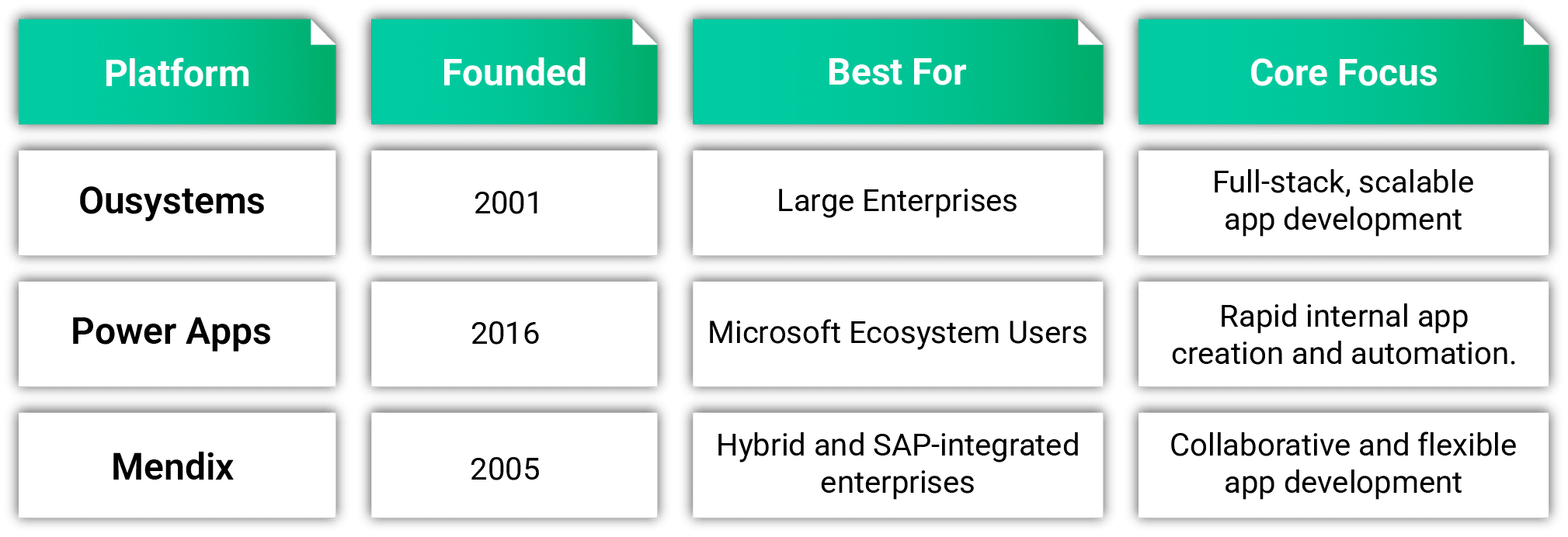
- 3. Meet the Big Three
- 4. Deep Dive: Understanding the Platforms
- 5. Feature Comparison: OutSystems vs Power Apps vs Mendix.
- 6. Real-World Power Apps Applications by TechnoRUCS
- 7. Which Platform Should You Choose?
- 8. Conclusion: The Smartest Investment for 2025
Introduction: Why Every Business is talking about Low-Code in 2025
Businesses everywhere are facing the same challenge – a growing list of digital requirements and not enough developers to deliver them.
They empower organizations to build apps visually, with drag-and-drop interfaces, ready-to-use templates, and automation turning development timelines from months into just weeks.
In 2025, the conversation often comes down to OutSystems vs Power Apps vs Mendix.
- OutSystems, for complex, enterprise-scale systems.
- Microsoft Power Apps, for fast, secure, and cost-efficient app creation.
- Mendix, for agile collaboration and hybrid environments.
Each platform brings its own strengths, and this guide breaks them down so you can choose what fits your organization best.
Why Low-Code Is No Longer Optional
- Speed to market: Launch new applications 3–5x faster.
- Empowered teams: Business users can build their own apps under IT governance.
- Cost savings: Reduce development and maintenance costs drastically.
- Integration-first mindset: Connect data and workflows seamlessly.
- Continuous innovation: Respond faster to business changes.
The shift has begun, and it’s here to stay.
Meet the Big Three
Deep Dive: Understanding the Platforms
OutSystems - The Enterprise Powerhouse
Highlights
- Full-stack capability: Build complete web and mobile solutions.
- AI-assisted development: Suggests improvements and accelerates delivery.
- Enterprise security: ISO and SOC 2 certified with strong compliance features.
- Built-in CI/CD: Manage continuous delivery across teams.
Best For:
Microsoft Power Apps - Fast, Accessible, and Business-Driven
Microsoft Power Apps is redefining how organizations approach app creation. It’s part of the Microsoft Power Platform, alongside Power Automate, Power BI, and Power Pages forming a unified ecosystem for automation, analytics, and digital innovation. Power Apps is designed to empower everyone from IT professionals to business users to build apps that simplify daily operations and drive efficiency
Highlights
- Deep Microsoft integration: Connects instantly with Microsoft 365, Teams, SharePoint, and Dynamics 365.
- AI Builder & Copilot: Build forms, automate approvals, and analyze data using natural language prompts.
- 400+ connectors: Seamlessly integrate with both Microsoft and third-party tools.
- Multiple app types: Canvas (custom UI), Model-driven (data-centric), and Portals (external access).
- Governance-ready: Built on Azure’s enterprise-grade security framework.
Best For:
Mendix - The Collaboration-Driven Platform
Highlights
- Visual model-driven design: Build apps without deep code dependency.
- Strong SAP integration: Ideal for companies running SAP environments.
- Agile project management: User stories, version control, and feedback built into the platform.
- Flexible deployment: Public cloud, private cloud, or on-premise.
- AI and IoT-friendly: Supports industrial applications and predictive analytics.
Best For:
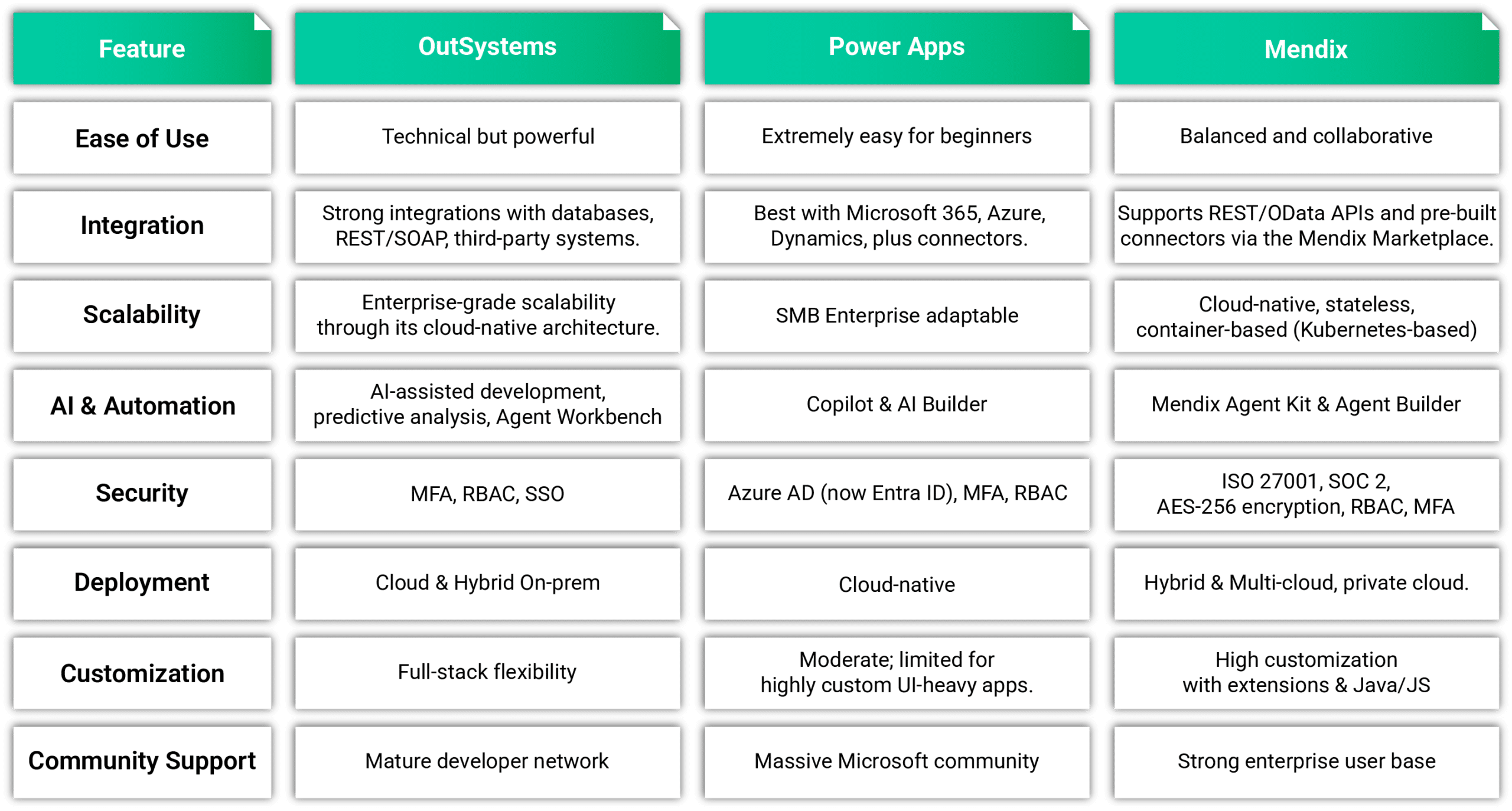
Feature Comparison: OutSystems vs Power Apps vs Mendix.
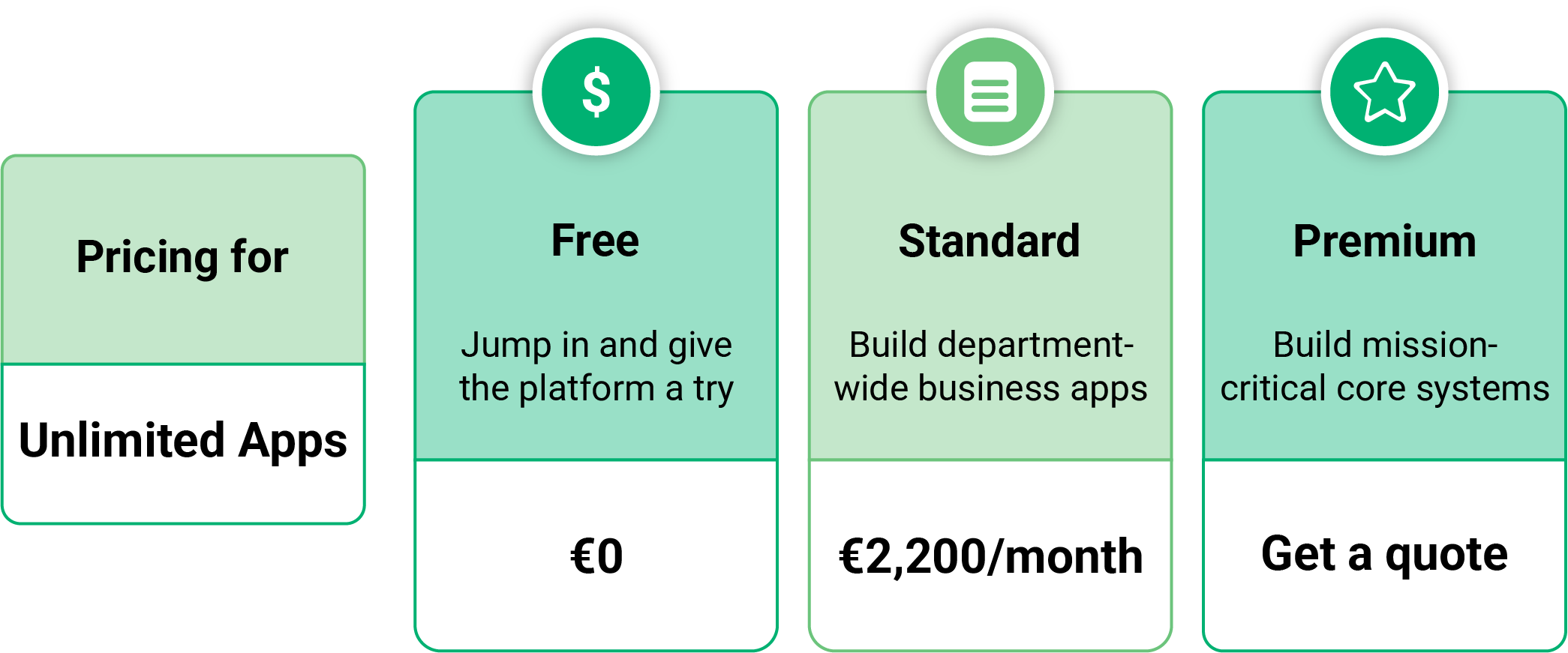
Pricing and Licensing in 2025: OutSystems vs Power Apps vs Mendix
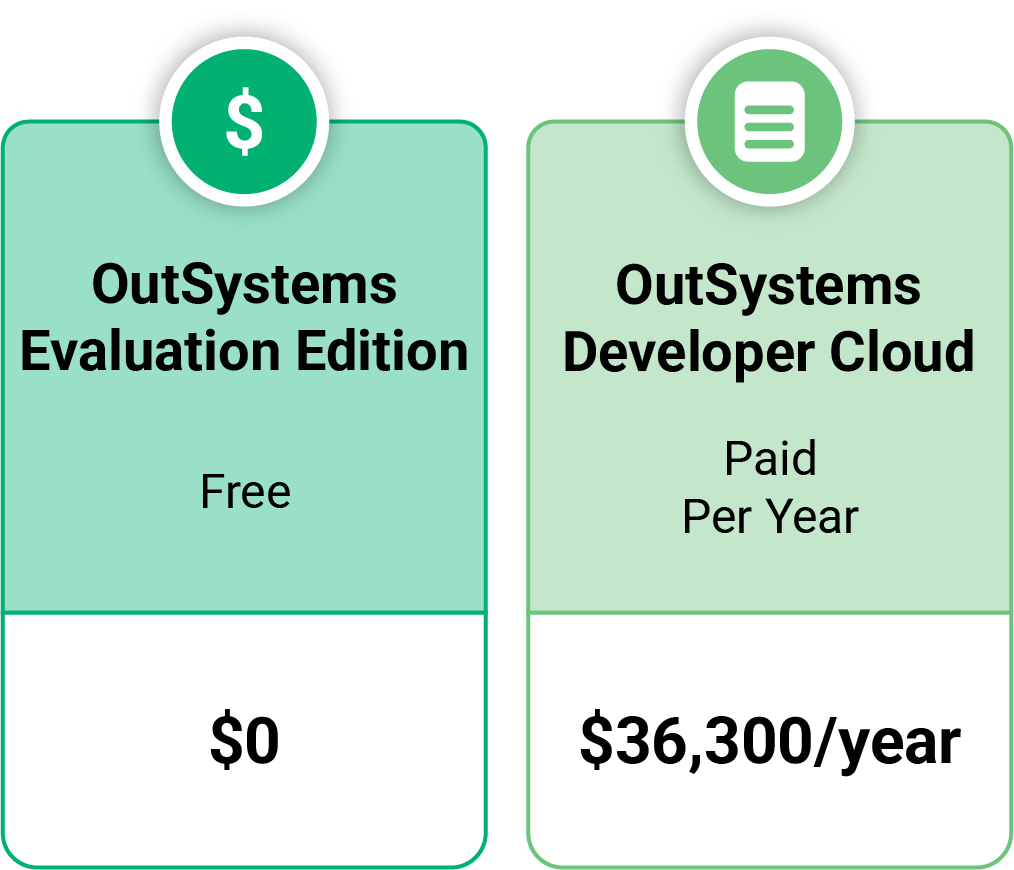
OutSystems: Scalable Power for Complex Enterprise Apps
Cost Overview

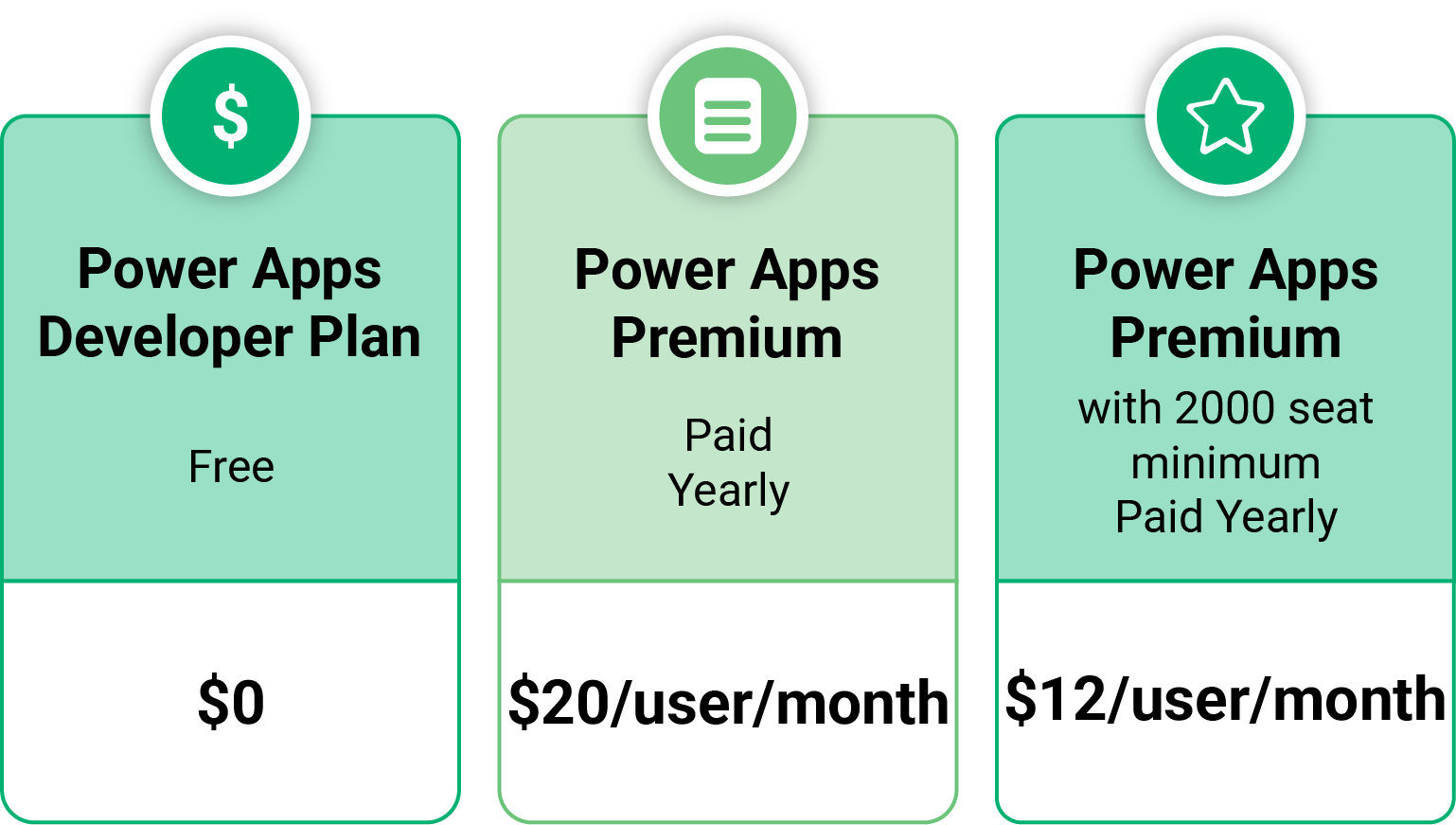
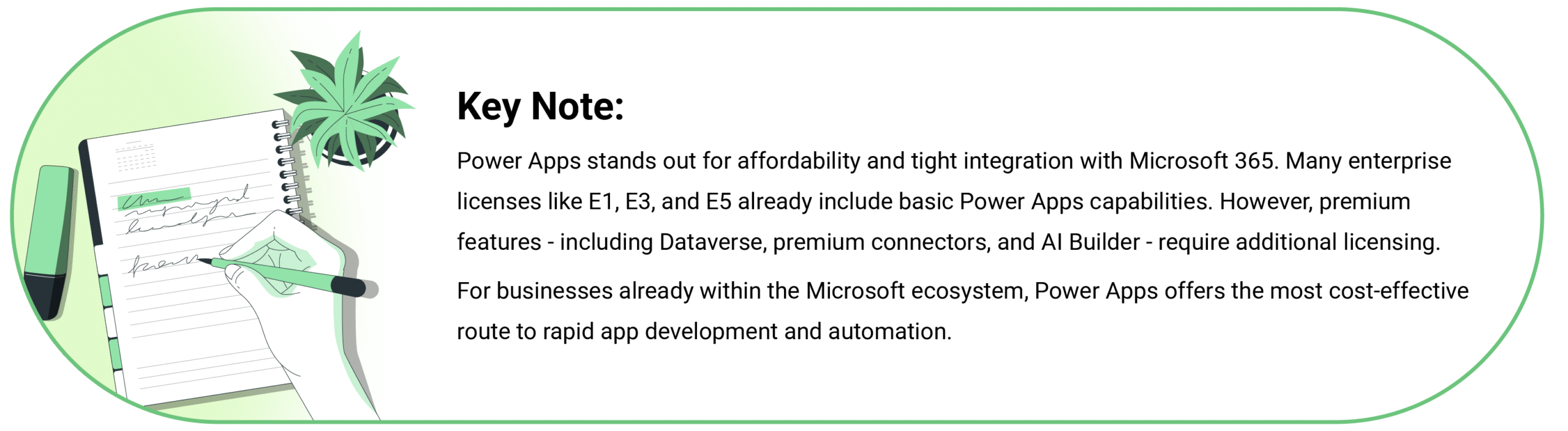
Power Apps: Cost-Effective and Seamlessly Integrated
Cost Overview:
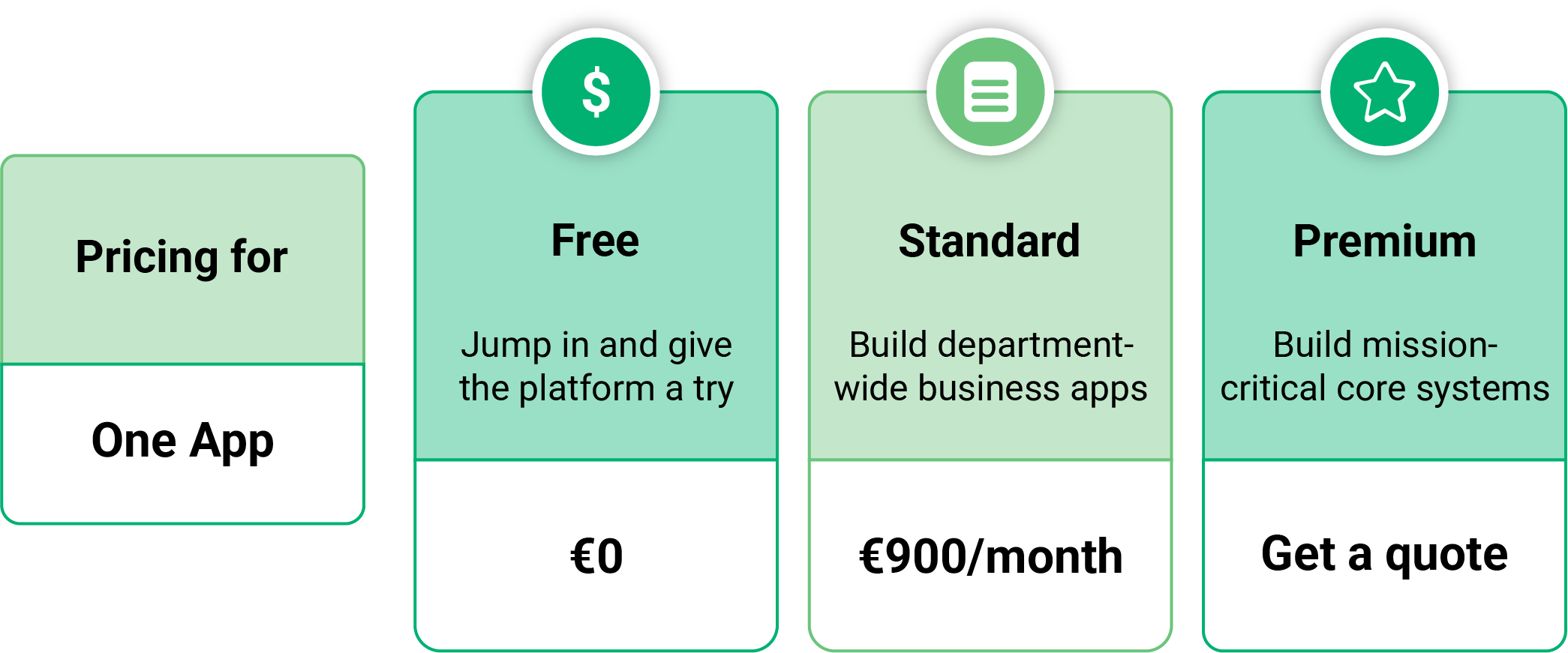
Mendix: Flexibility and Balanced Pricing for Enterprises
Cost Overview:

Summary: Which Platform Fits Your Business?
- Choose OutSystems if you’re building full-stack enterprise systems that demand high scalability and performance.
- Choose Power Apps for fast, affordable app development and seamless Microsoft integration, especially when you already have a Microsoft 365 license.
- Choose Mendix for collaboration flexibility, hybrid deployment, and a balanced enterprise pricing model.
Each platform offers a unique value proposition, and the comparison of OutSystems vs Power Apps vs Mendix becomes essential when deciding which aligns best with your organization’s tech stack, scalability goals, and ecosystem preferences. Whether you’re optimizing internal workflows or delivering enterprise-grade systems, understanding these pricing structures ensures you invest wisely in 2025’s evolving low-code landscape.
Real-World Power Apps Applications by TechnoRUCS
1. Field Quality Tool for ATC Logistics
Project Overview:
Impact:
- 60% faster coordination between logistics teams.
- Reduced manual errors and improved accountability.
- Consistent adherence to safety protocols across field operations.
2. Financial Assistance App for Mystis Cares
Project Overview:
Impact:
- Reduced approval turnaround time by 50%.
- Transparent expense categorization and documentation.
- Automated workflows ensured compliance and traceability.
3. Governance App for EATON Corporation
Project Overview:
Impact:
- Decision-making cycle time cut in half.
- Clear visibility into committee activities.
- Improved collaboration between business units and leadershi
Which Platform Should You Choose?

Conclusion: The Smartest Investment for 2025
- Here’s the simple breakdown:
- Power Apps wins for speed, accessibility, and cost-efficiency.
- OutSystems wins for complex, enterprise-grade scalability.
- Mendix wins for collaboration and hybrid flexibility.
- Here’s the simple breakdown when looking at OutSystems vs Power Apps vs Mendix:
- Power Apps wins for speed, accessibility, and cost-efficiency.
- OutSystems wins for complex, enterprise-grade scalability.
- Mendix wins for collaboration and hybrid flexibility.