
Table of Contents
- 1. Introduction
- 2. What is Salesforce Sales Cloud?
- 3. Core Capabilities of Salesforce Sales Cloud
- 4. Why Businesses Choose Salesforce Sales Cloud
- 5. Key Benefits of Salesforce Sales Cloud
- 6. How Salesforce Sales Cloud Works in Real Business Scenarios
- 7. Real-World Sales Cloud Quoting Scenario
- 8. Conclusion
- 9. Frequently Asked Questions (FAQ)
Sales organisations today operate in an environment that is far more complex than it was even a few years ago. Buyers are better informed, decision-making involves multiple stakeholders, and sales cycles are longer and more competitive. Relying on spreadsheets, emails, and disconnected tools makes it difficult to maintain control, ensure consistency, and forecast revenue with confidence.
This is where Salesforce Sales Cloud plays a critical role. Salesforce Sales Cloud is not simply a contact management tool. It is a full-scale sales enablement platform designed to bring structure, visibility, and predictability to sales operations. It supports sales teams in executing deals efficiently, helps managers track performance accurately, and enables leadership to make informed, data-driven decisions.
This guide provides a complete and practical explanation of Salesforce Sales Cloud. It covers what the platform is, how it fits into the Salesforce ecosystem, its core features and benefits, and how it works in real-world business scenarios. The goal is to help decision-makers understand whether Sales Cloud is the right solution for their organisation.
What is Salesforce Sales Cloud?
Salesforce Sales Cloud is a cloud-based CRM designed to manage the entire sales lifecycle, from initial prospect engagement through qualification, negotiation, closure, and ongoing account management. It brings structure to fragmented sales processes by replacing ad-hoc tracking with a centralised system that records all interactions, activities, and deal updates in one place, ensuring teams and leadership work from a single source of truth.
Built on the Salesforce Platform, Sales Cloud offers flexibility through configurable objects, automation, role-based access, and integrations, allowing organisations to tailor the system to their sales processes rather than adapting their processes to the software.
Core Capabilities of Salesforce Sales Cloud
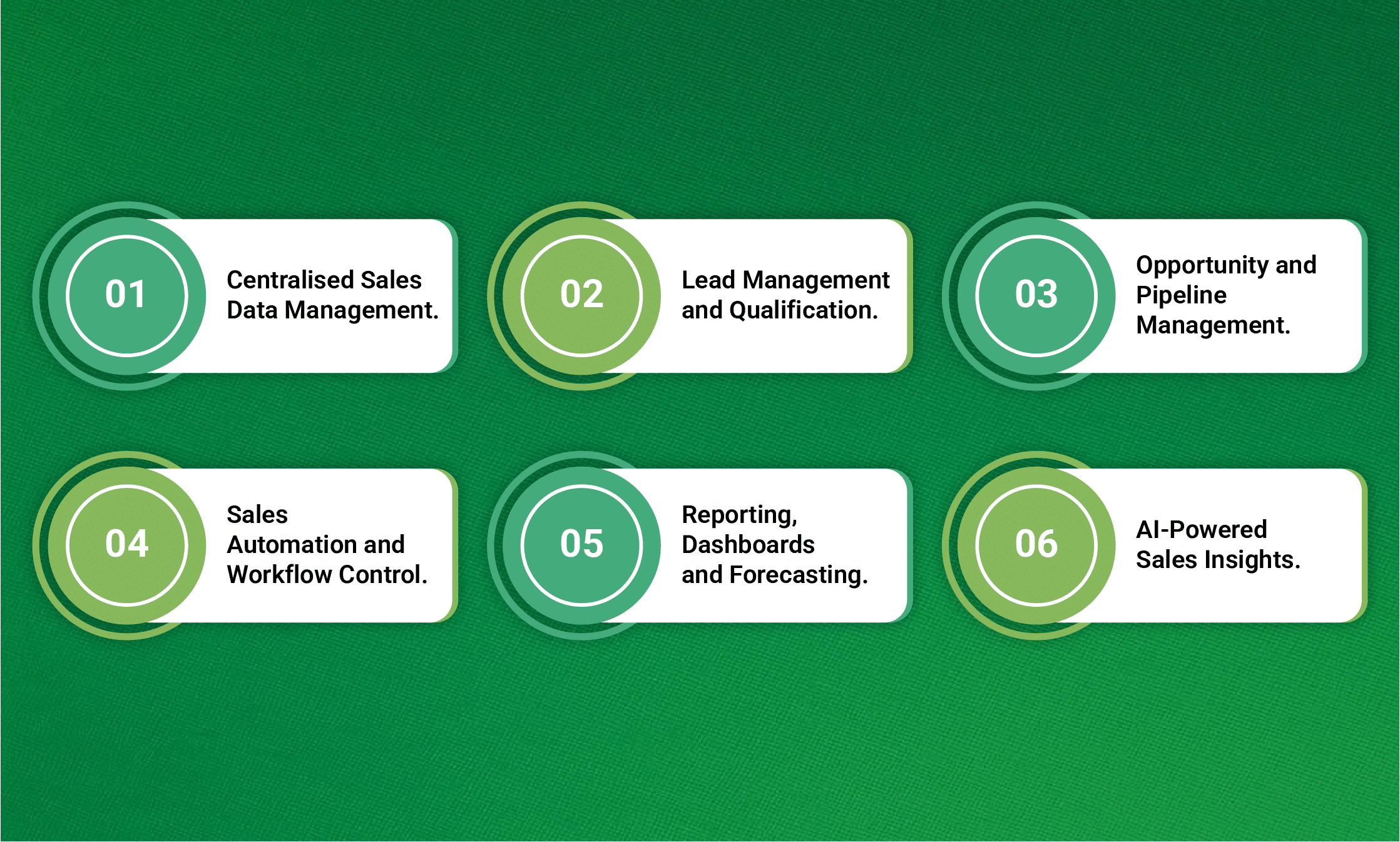
Centralised Sales Data Management.
Salesforce Sales Cloud brings all customer and prospect information into a single, central system. It captures contact details, communication history, meeting notes, emails, documents, and call logs in one place. This unified view gives sales teams complete context before every interaction, reduces data duplication, and avoids inconsistencies across tools.
Lead Management and Qualification.
Sales Cloud enables structured lead management by capturing leads from multiple sources such as websites, campaigns, partners, and integrations, automatically routing them to the right sales representatives based on predefined rules, and using lead scoring to prioritise prospects by engagement and fit, helping sales teams focus on high-quality leads, respond faster, improve conversion rates, and minimise missed opportunities.
Opportunity and Pipeline Management.
Once a lead is qualified, it is converted into an opportunity and tracked through defined sales stages such as discovery, proposal, negotiation, and approval. Sales Cloud captures key deal details including expected revenue, close dates, probability, and competitor information, creating clear visibility into pipeline health. This allows managers to monitor deal progress without constant follow-ups and helps leadership assess sales performance and the realism of revenue targets.
Sales Automation and Workflow Control.
Salesforce Sales Cloud reduces the time spent on administrative work through automation using tools like Salesforce Flow. Repetitive tasks such as follow-up reminders, task creation, approvals, and status updates are automated to improve efficiency and consistency across teams. As processes change, workflows can be easily adjusted without major redevelopment, providing long-term flexibility.
Reporting, Dashboards, and Forecasting.
Salesforce Sales Cloud offers powerful reporting and dashboards that provide real-time visibility into sales performance. Custom reports track metrics such as conversion rates, deal velocity, pipeline value, and revenue trends, while role-based dashboards present insights tailored for sales reps, managers, and executives. Forecasting tools use historical data and current pipeline information to deliver more accurate revenue predictions and support better planning and resource allocation.
AI-Powered Sales Insights.
Salesforce Sales Cloud integrates AI through Salesforce Einstein to analyse historical and real-time data and identify patterns that impact deal outcomes. It predicts opportunity success, flags at-risk deals, and recommends next best actions to guide sales teams. By enhancing decision-making rather than replacing it, Einstein helps sales reps focus better, alerts managers early, and improves forecasting accuracy for leadership.
Why Businesses Choose Salesforce Sales Cloud
Designed for Scalability and Growth.
Sales Cloud is designed to scale with business growth. As organisations expand their sales teams, introduce new products, or enter new markets, the platform adapts without requiring a complete system overhaul. This makes it suitable for startups establishing their first structured sales process as well as large enterprises managing complex, multi-region operations.
Enterprise-Grade Security and Reliability.
Salesforce provides strong security features, including role-based access control, encryption, audit trails, and compliance with global standards. Regular platform updates ensure that customers benefit from new features and security enhancements without manual upgrades. This reliability reduces long-term risk and operational overhead.
Strong Ecosystem and Integration Capabilities
Sales Cloud is part of a broader ecosystem of Salesforce products and third-party applications. It integrates seamlessly with marketing automation tools, customer support platforms, analytics solutions, and partner portals. This ecosystem approach enables organisations to manage the entire customer journey on a single platform, reducing data silos and improving collaboration across departments.
Key Benefits of Salesforce Sales Cloud
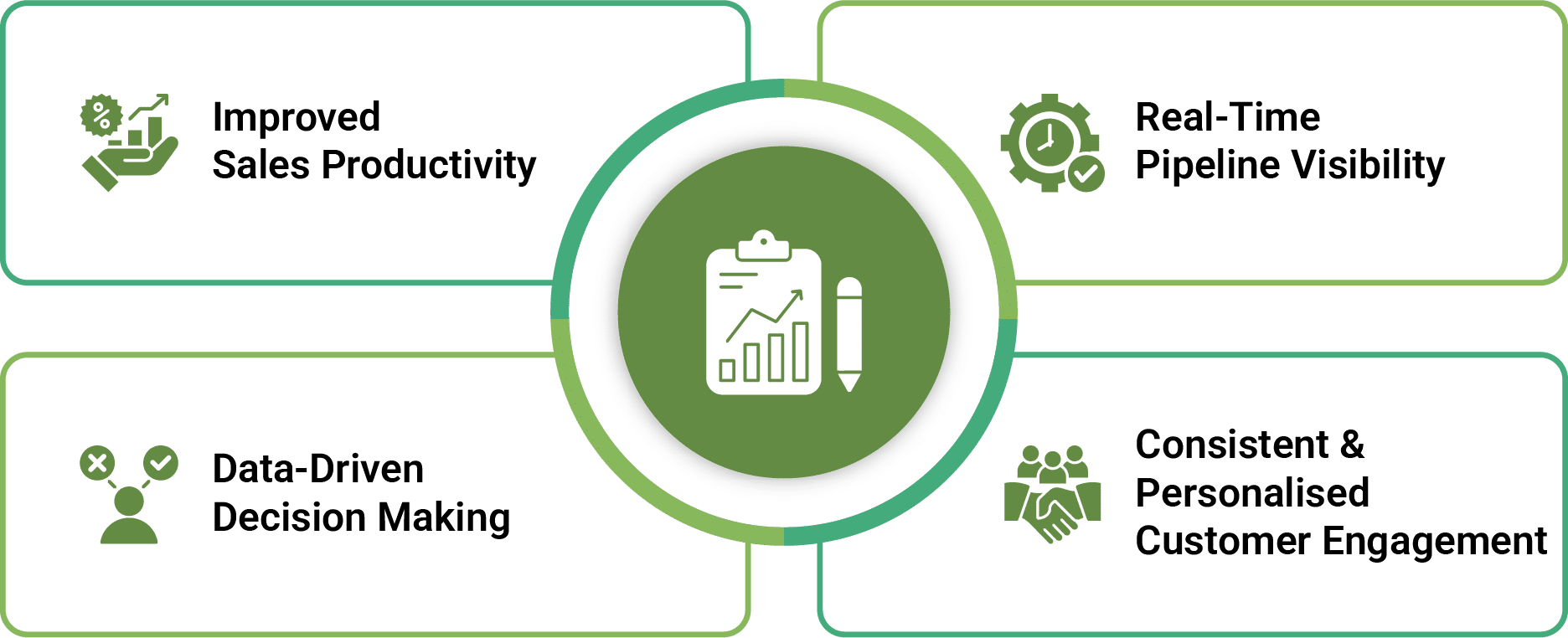
Improved Sales Productivity
By automating routine tasks and centralising information, Sales Cloud reduces administrative overhead. Sales representatives spend more time engaging with prospects and customers, which directly impacts revenue generation.
Real-Time Pipeline Visibility
Managers and leaders have immediate access to pipeline data. They can identify bottlenecks early, monitor progress against targets, and make proactive adjustments to strategy. This visibility supports more accurate forecasting and accountability.
Consistent and Personalised Customer Engagement
With complete interaction history available in one place, sales teams deliver more relevant and personalised conversations. Customers benefit from continuity and professionalism, while organisations build stronger relationships.
Data-Driven Decision Making
Dashboards, reports, and AI insights replace guesswork with evidence-based decisions. Leadership teams gain confidence in planning, budgeting, and growth initiatives.
How Salesforce Sales Cloud Works in Real Business Scenarios
End-to-End Sales Workflow
In a typical scenario, a prospect submits an enquiry through a company website. The lead is automatically captured in Sales Cloud and assigned to the appropriate sales representative. The representative qualifies the lead, converts it into an opportunity, and tracks it through the defined sales stages.
Automated reminders ensure timely follow-ups, while managers monitor progress through dashboards. Once the deal is closed, the information flows to account management or customer support teams, ensuring continuity in customer engagement.
Automated Follow-Ups and Approvals
Sales Cloud automates follow-up tasks and approval processes. For example, discount approvals can be routed to managers automatically based on predefined thresholds. This reduces delays and ensures compliance with internal policies.
AI-Driven Deal Prioritisation
Einstein AI analyses deal patterns and highlights opportunities with a high likelihood of closure. It also flags deals showing risk signals, enabling sales teams to intervene early. This proactive approach improves win rates and sales efficiency.
Real-World Sales Cloud Quoting Scenario
Challenges with Traditional Quoting
Many organisations struggle with quoting processes that rely on third-party tools. These tools often provide limited flexibility for complex pricing scenarios, introduce additional licence costs, and force sales teams to switch between multiple systems.
Building a Native Sales Cloud Quoting Solution
Using Salesforce Sales Cloud, custom quote rendering can be built directly within the platform. By leveraging Aura Components, Visualforce, and Apex, organisations can generate branded PDF quotes aligned with their pricing logic and approval workflows. Quotes are stored directly against opportunities and can be downloaded or emailed with a single click.
Business Impact
This approach eliminates third-party licence costs, reduces context switching, and accelerates quote turnaround time. Sales teams work more efficiently, and customers receive accurate, professional quotes faster.
Conclusion
Salesforce Sales Cloud is particularly well suited to organisations with complex sales processes, multiple stakeholders, and a need for accurate forecasting. It delivers the greatest value when sales operations require structure, visibility, and scalability.
For very small teams with simple tracking needs, lighter tools may be sufficient. However, for businesses aiming to grow predictably and professionally, Sales Cloud represents a strong long-term investment.
Frequently Asked Questions
What is Salesforce Sales Cloud used for?
Salesforce Sales Cloud is used to manage leads, opportunities, sales pipelines, automation, reporting, and forecasting within a single platform.
How does Salesforce Sales Cloud improve productivity?
It automates routine tasks, centralises data, and prioritises high-value deals, allowing sales teams to focus on selling.
What is the difference between Sales Cloud and Service Cloud?
Sales Cloud manages revenue generation, while Service Cloud handles customer support and service operations.
How long does Salesforce Sales Cloud implementation take?
Implementation timelines vary from a few weeks to several months, depending on business complexity and customisation.
Does Salesforce Sales Cloud integrate with Experience Cloud?
Yes, Sales Cloud integrates natively with Experience Cloud for partner and customer portals.
Which businesses benefit most from Salesforce Sales Cloud?
B2B organisations, enterprises, and companies with complex or high-value sales cycles benefit the most.
Is Salesforce Sales Cloud worth the cost?
For organisations that need visibility, automation, and scalable sales operations, Salesforce Sales Cloud delivers strong return on investment.