
Hiring developers can be confusing. There is a lot of options, and it is easy to make a costly mistake. This guide is here to help.
If you want to hire .NET developers, you are already on the right track. .NET is one of the most trusted platforms in software development. It is stable, secure, and backed by Microsoft. But knowing why .NET is good is different from knowing how to hire the right person to build with it.
This guide covers what you need to know – in plain language. You will learn what .NET developers can build, what skills to look for, how much it costs, and how to run a hiring process that actually works.
Why .NET? And Why Now?
.NET is stable, secure, and runs on Windows, Linux, and macOS. Microsoft has supported it for over two decades and continues to invest in it. For businesses, this means less risk and a technology that will still be around in 10 years.
Modern .NET (version 6 and above) works well with cloud platforms, containers, and AI tools. It is no longer just a Windows technology. It is a solid choice for almost any type of business software.
The AI Factor
AI tools like GitHub Copilot help developers write code faster. But they do not replace developers. Good developers using AI tools get more done than ever before. When you hire .NET developers in 2026, ask if they use AI tools in their daily work. It is a sign of someone who stays current.
Bottom line: .NET is a safe, modern, and forward-looking choice for business software.
What Can .NET Developers Build for You?
.NET developers can build many types of software. Here is a quick overview of the most common use cases:
Web Applications and SaaS Platforms
Using ASP.NET Core, developers can build fast and secure web applications. This includes customer portals, admin dashboards, and full SaaS products. If your business runs on a web platform, this is likely your main use case.
Enterprise Systems and Business Automation
.NET is a good fit for ERP integrations, workflow automation, and finance systems. If your team is doing tasks manually that software could handle, a .NET developer can help you automate that work and save time.
Cloud-Native and Microservices Architecture
.NET works well with cloud platforms like Azure, AWS, and GCP. Developers can build systems that scale as your business grows, using containers and microservices. This is important if you expect high traffic or fast growth.

In-House, Outsourced, or Dedicated Team - Which Is Right for You?
There are three main ways to hire .NET developers. Each one works better in different situations.
In-House Hiring
You hire a developer as a full-time employee. This gives you full control and a developer who is part of your team long-term. The downside is cost. Salaries, benefits, and onboarding take time and money. This model works best for businesses with ongoing, long-term development needs and a stable budget.
Offshore Outsourcing
You hire a development company or team in another country, such as India, Eastern Europe, or Southeast Asia. Costs are much lower. Quality can be very good if you choose the right vendor. The key is to do proper research before you commit. Bad vendors exist, so take time to check references and run a test project first.
Dedicated Developer Teams
A dedicated developer works only on your project. They are employed by a vendor but managed by you day-to-day. You get the focus of an in-house hire without the cost of employment. This model is a good balance of quality, control, and cost.
TechnoRucs offers dedicated .NET developers who are ready to join your project quickly. Each developer is vetted for technical skills and communication ability, so you can start building without a long search process.
If you are not sure which model to choose, start with a dedicated developer. It is flexible, focused, and usually the best value for growing businesses.
Skills to Look for in a .NET Developer
You do not need to be a technical expert to hire well. You just need to know what to look for. Here is a simple breakdown of the skills that matter.
Technical Skills
These are the core skills a .NET developer needs to do the job.
- C# – the main programming language for .NET. The developer should know it well.
- NET Core – used to build web applications and APIs. Most .NET projects need this.
- Entity Framework Core – used to work with databases. Look for developers who understand how to write efficient queries.
- SQL Server or PostgreSQL – strong database skills are important for almost every project.
- REST API design – the developer should know how to build clean, well-documented APIs.
- Cloud platforms – Azure is the most common for .NET, but AWS and GCP are also used.
- Docker – modern apps run in containers. This is now a basic skill.
- CI/CD pipelines – the ability to set up automated testing and deployment saves time and reduces errors.
Soft Skills
Technical skills get the job done. Soft skills determine how smoothly the work goes, especially on remote teams.
- Clear communication – the developer should be able to explain their work in simple terms.
- Raises problems early – you want someone who tells you about issues right away, not at the last minute.
- Understands the business goal – a developer who knows why they are building something makes better decisions.
- Works well in agile teams – comfort with sprints, daily check-ins, and team reviews is a good sign.
- Keeps learning – technology changes. Developers who stay up to date are more valuable over time.
Note: A good C# developer is not always a good .NET developer. Look for real framework experience, cloud knowledge, and communication skills.
Architecture Knowledge
Senior developers think about how the whole system fits together, not just individual features. When hiring for important projects, look for:
- Microservices – the ability to break a large system into smaller, independent parts that are easier to maintain and scale.
- Clean Architecture and SOLID principles – these help developers write code that is easy to update and test over time.
- Domain-Driven Design (DDD) – a way of organising complex business logic so it stays manageable as the product grows.
- Event-driven design – useful for systems that need to handle a lot of activity at once, such as messaging or notifications.
- Database design – a good developer does not just write queries. They design databases that work well as data grows.
In interviews, ask the candidate to explain how they built a past system. Good architects explain their choices clearly and talk about trade-offs. If someone cannot explain their work simply, that is a warning sign.
Security Best Practices
Every .NET developer should understand basic security. It should not be an afterthought. When evaluating candidates, check for knowledge of:
- NET Core Identity, OAuth2, and OpenID Connect – standard tools for login and user access control.
- JWT tokens – proper handling of authentication tokens, including expiry and refresh.
- Input validation and parameterized queries – basic practices that prevent common attacks like SQL injection.
- HTTPS and CORS settings – required for any app that is live on the internet.
- Secrets management – passwords and keys should never be stored in code. Azure Key Vault or environment variables should be used instead.
- OWASP Top 10 – awareness of the most common security vulnerabilities is a basic expectation.
For healthcare and finance projects, ask specifically about HIPAA, PCI-DSS, or GDPR experience. Security compliance is not optional in regulated industries.
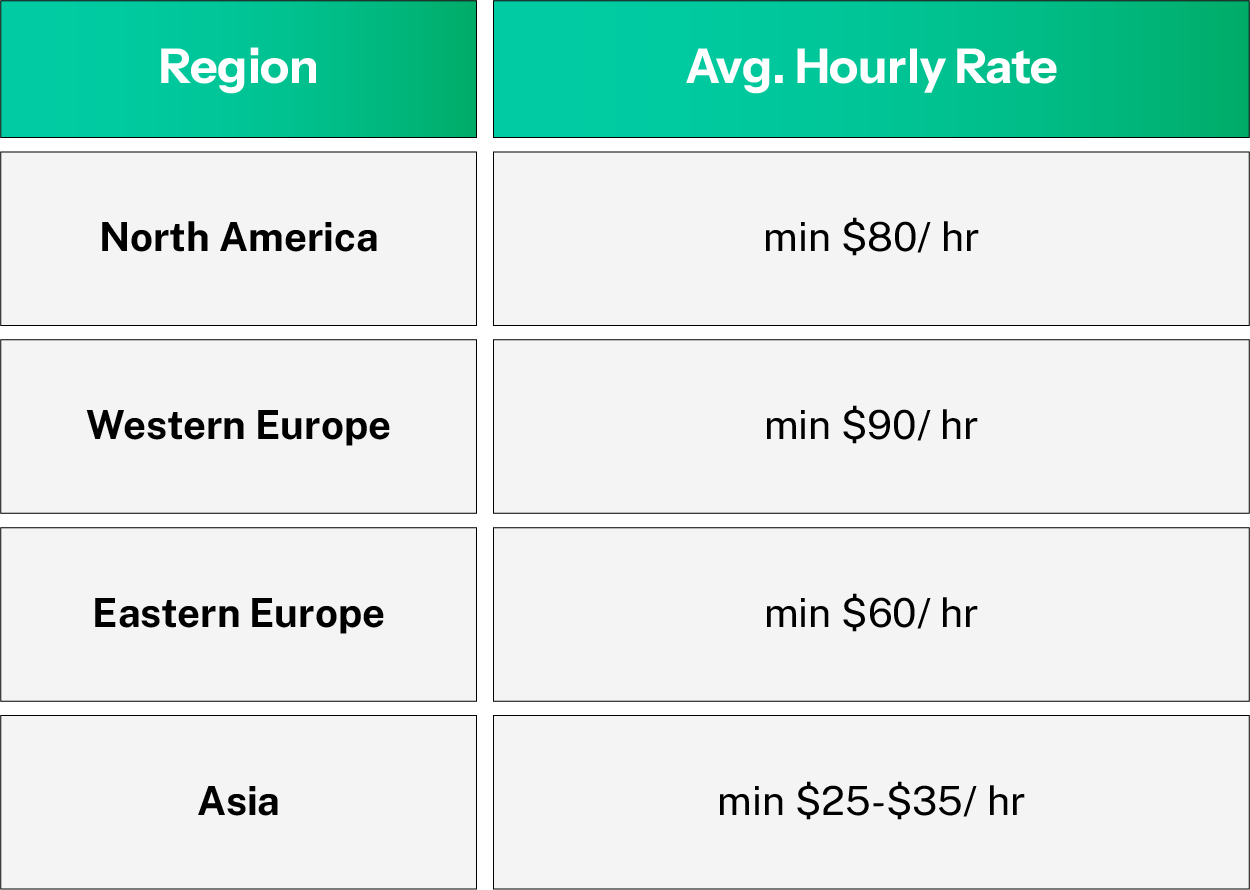
How Much Does It Cost to Hire .NET Developers in 2026?
Rates depend on where the developer is based, their experience level, and your hiring model. Here is a simple overview:
Other Costs to Keep in Mind
The hourly rate is not the only cost. When comparing options, also consider:
- Onboarding time – it takes time for any developer to learn your codebase and start being productive
- Communication delays – working across time zones adds overhead, especially if there are language barriers
- Technical debt – a cheaper developer who writes poor code can cost much more to fix later
- Tools and access – software licenses, environments, and security setup all have a cost
The cheapest option is rarely the best value. Focus on quality, communication skills, and relevant experience.
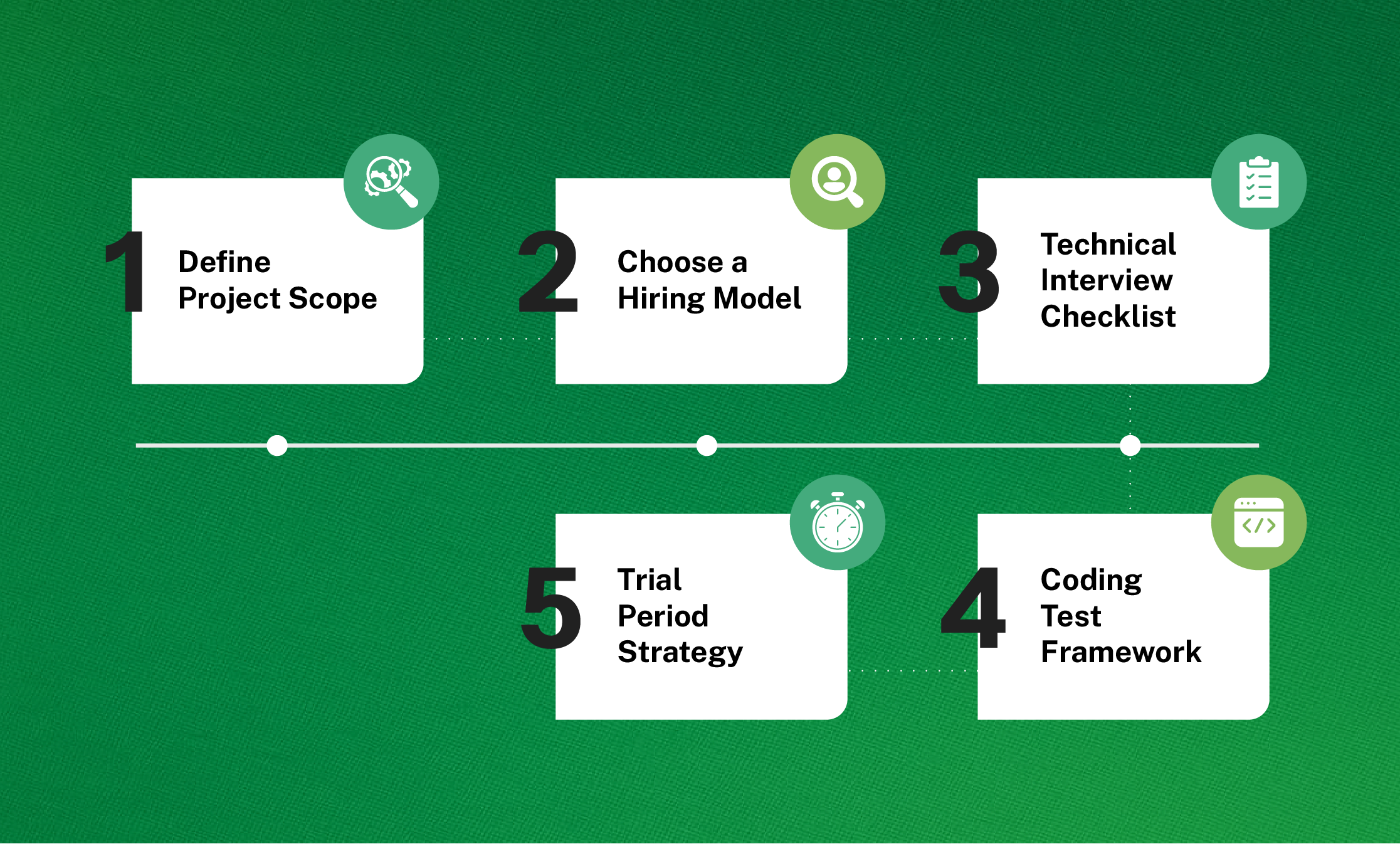
How to Hire the Right .NET Developer (Step-by-Step Process)
Here is a simple process you can follow. It works whether you are hiring a freelancer, a dedicated developer, or a full team.
Step 1: Define Project Scope
Before you look for anyone, get clear on what you need built. If your brief is vague, you will attract the wrong candidates or get a product that misses the mark. Before you start, be ready to answer:
- What does the software need to do?
- What does success look like in 3 to 6 months?
- What technology is already in place, if any?
- Who will the developer work with?
- What is the timeline and rough budget?
You do not need a long document. A clear one-page summary is enough. The goal is to make decisions before hiring, not during.
Step 2: Choose a Hiring Model
Your hiring model affects cost, speed, and how much control you have. Here is a simple guide:
- Freelancer – good for short tasks like a single feature or a bug fix. Easy to start, but less reliable for long projects.
- Dedicated developer – works only on your project, managed by you, employed by a vendor. Good balance of focus and cost.
- Outsourced team – a company delivers the project end-to-end. Good for well-defined projects where you want less day-to-day involvement.
- In-house hire – a full-time employee. Best for long-term, core development work if you have the budget.
Not sure? Start with a dedicated developer. It is flexible, focused, and usually the right choice for growing businesses.
Step 3: Technical Interview Checklist
You do not need to be a developer to run a good interview. Ask questions that show how the candidate thinks, not just what they have memorised. Good questions to use:
- Tell me about a system you designed. What decisions did you make and why?
- How would you build an API that is used by both a web app and a mobile app?
- Tell me about a time you had to improve someone else’s code. How did you handle it?
- How do you manage user login and permissions in a web application?
- What do you do when a database query is running slowly?
- How do you set up automated testing and deployment for a .NET project?
- Tell me about a time something broke in production. How did you fix it?
Listen for clear thinking and honest answers. If a candidate cannot explain their work in simple terms, they may struggle to communicate on your team.
Step 4: Coding Test Framework
A coding test shows you how someone actually works. Keep it simple and fair:
- Keep it short – 2 to 4 hours is enough. Longer tests push away good candidates who have other commitments.
- Pay for it – a small payment shows respect and attracts serious applicants.
- Make it relevant – use a task similar to real work in your project. Avoid abstract puzzles.
- Review the full submission – look at code structure, naming, error handling, and tests. These reveal how the person thinks.
- Do a short debrief call — ask them to walk you through their solution. This shows communication skills and technical reasoning.
The goal is to see how they work, not to trick them. Clean, simple, well-tested code on a small task is a very good sign.
Step 5: Trial Period Strategy
Even after a great interview, nothing confirms fit like real work. Run a short trial before committing long-term:
- Length: 2 to 4 weeks for a freelancer or dedicated developer. Longer for a full team.
- Task: Pick something real but not critical. A contained feature or improvement works well.
- Success criteria: Decide in advance what good looks like code quality, communication, and meeting the deadline.
- Check-ins: Ask for a short daily update. This shows how they communicate before any pressure builds up.
- Decision: At the end of the trial, make a clear yes or no decision. Do not let it drag on with no conclusion.
A well-run trial is the most useful part of the whole process. It removes guesswork and gives both sides a clear picture of what working together looks like.
Industries That Use .NET the Most
Finance and Banking
.NET is a common choice for financial software because of its strong security features and reliability. Banks, payment companies, and fintech startups use it to build payment systems, fraud detection tools, and trading platforms.
Healthcare
Healthcare software must meet strict data protection rules like HIPAA. .NET handles these requirements well. It is used in patient management systems, telehealth platforms, and electronic health records.
E-Commerce and SaaS
.NET handles high traffic well and integrates easily with payment gateways and third-party services. If you are building an online store or a software product, .NET is a proven and reliable choice.
Common Hiring Mistakes to Avoid
Many businesses make the same mistakes when hiring developers. Here is what to watch out for:
- Hiring on price alone – a developer charging low rates but delivering poor code will cost you more in fixes and delays
- Skipping the architecture question – always ask how they would design your system, not just whether they know specific tools
- Ignoring cloud and DevOps skills – modern .NET development depends on cloud platforms and automated deployment
- No clear goals or success criteria – if you do not define what good looks like, you will not know when you have it
- Poor onboarding – even great developers need time to learn your codebase, your team, and your processes
AI and .NET Development in 2026
AI tools are now a normal part of software development. They help developers write code faster, catch bugs earlier, and write better tests. This does not mean developers are being replaced. It means good developers are getting more done.
When you hire .NET developers, ask if they use AI tools in their daily work. A developer who uses them well can produce significantly more than one who does not.
On the product side, .NET developers can also build AI features into your software. This includes things like smart search, recommendation engines, automated reports, and chatbots. If you want AI in your product, .NET has good support for it through Azure and open-source libraries.
Quick Takeaways
- .NET is a stable, cross-platform technology that works well for enterprise and SaaS products
- A dedicated developer team is usually the best balance of quality, focus, and cost
- Rates vary by region – Eastern Europe and Asia offer good quality at lower cost
- Do not hire based on price alone – communication and architecture skills matter more
- Always run a short paid trial before a long commitment
- Ask candidates if they use AI tools – it is now a useful signal
Frequently Asked Questions
Why choose .NET over Node.js or Python?
.NET is faster for large, data-heavy applications. It uses a strongly-typed language (C#) which reduces bugs. It also integrates well with Microsoft tools like Azure and Active Directory. For enterprise software, it is a very reliable choice.
Should I hire .NET Core or .NET Framework developers?
For new projects, always use modern .NET (version 6 and above). It is cross-platform, faster, and actively supported. .NET Framework is older and no longer gets new features. If you have old software on .NET Framework, you will want a developer who knows how to migrate it.
How do I check if a developer thinks about architecture?
Ask them to describe a system they have built. Ask what decisions they made and what they would do differently. Good architects explain their choices clearly and talk about trade-offs. If they can only answer quiz-style questions but cannot explain a full system, that is a concern.
Is outsourcing .NET development a good idea?
Yes, if you choose the right vendor. The risk is manageable with a clear scope, a trial project, and regular communication. The bigger risk is often hiring cheaply without proper checks and ending up with a system that is hard to maintain or scale.
How long does it take to hire .NET developers?
For a freelancer or dedicated developer, expect 2 to 4 weeks from start to first day of work. For a vendor team, it can be faster – often 1 to 2 weeks once requirements are agreed. In-house hiring takes the longest, usually 1 to 3 months.
Conclusion
Hiring .NET developers does not have to be complicated. Start with a clear scope. Choose a hiring model that fits your budget and timeline. Look for technical skills, communication ability, and architecture experience. Run a short trial before committing.
.NET gives you a strong and reliable foundation. The right developer will help you build on it effectively.
If you do this process well, your development team becomes an asset — not a source of stress.